
Falls in Seniors Living Alone: How to Prevent Them and What to Do in the First Hour

Around 30% of people over 65 living at home fall at least once a year. 10% fall two or more times, and between 5% and 10% of these falls result in a fracture. In Spain, falls have already become the leading cause of death from external causes (Ministry of Health, Consensus Document on Frailty and Falls, 2026).
If you live alone on the Costa del Sol or in Benidorm, far from your children and with family two hours away by plane, there’s a fact that changes the approach. What most worsens the prognosis of a fall is usually not the impact, but the time spent on the floor unable to call for help. This guide covers both: reducing the risk and having a plan for what happens if it still occurs.
In 30 seconds: 30% of people over 65 fall each year, and 5-10% of falls result in a fracture. After a hip fracture, only 59% of those who walked independently return to doing so within 30 days, and barely half are back home a month later. In a study of people aged 90 or older, 80% of those who fell could not get up by themselves, and 30% spent an hour or more on the floor. Prevention focuses on three fronts: exercise, medication, and the home.
A Fall Is Not Just a Scare: What the Data Says
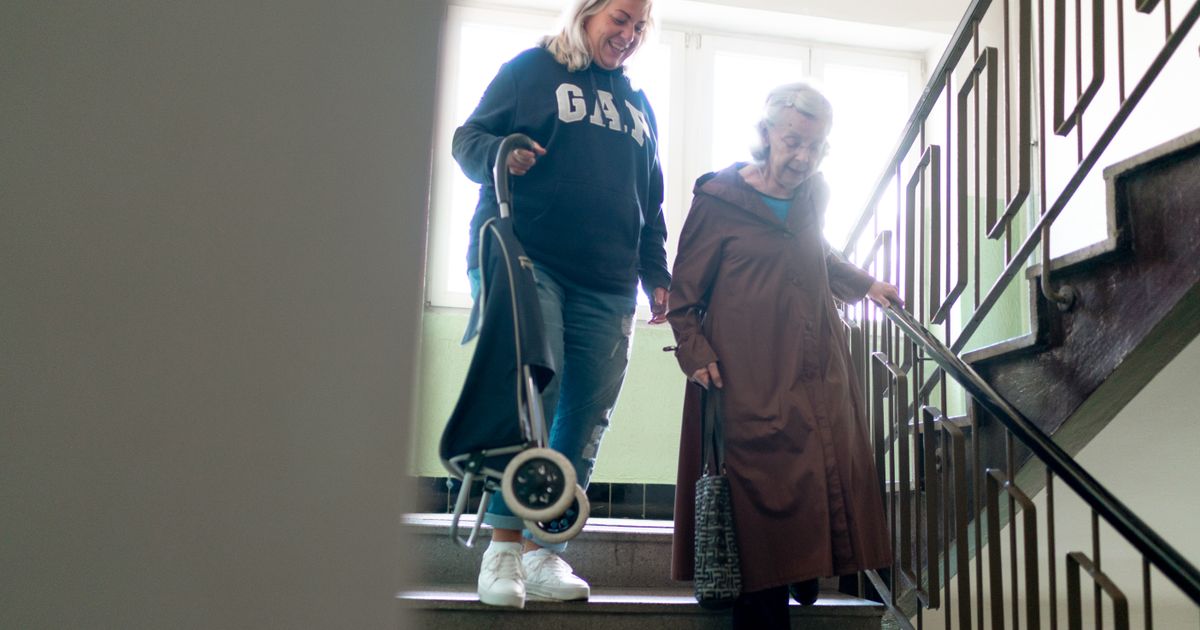
The consequence that marks a before and after is a hip fracture. The National Hip Fracture Registry collected data in 2023 from 9,906 patients from 53 hospitals, with a median age of 87 years and 75% women. 98% underwent surgery, and the average stay was 9.8 days (RNFC, 2023 Annual Report, published in 2025).
The two numbers worth remembering are not surgical. 82% of those who suffer a hip fracture walked independently before falling; after 30 days, only 59% do. And barely 49% live in their own home a month later. Mortality at 30 days is 8.8%.
In other words: a three-second fall can determine whether a person continues to live independently. That is why the Interterritorial Council of the National Health System updated its consensus document in April 2026. The text now classifies older people into four risk levels and proposes active case finding from primary care starting at age 70 (Ministry of Health, April 9, 2026).
Time on the Floor: The Factor That Most Worsens the Prognosis
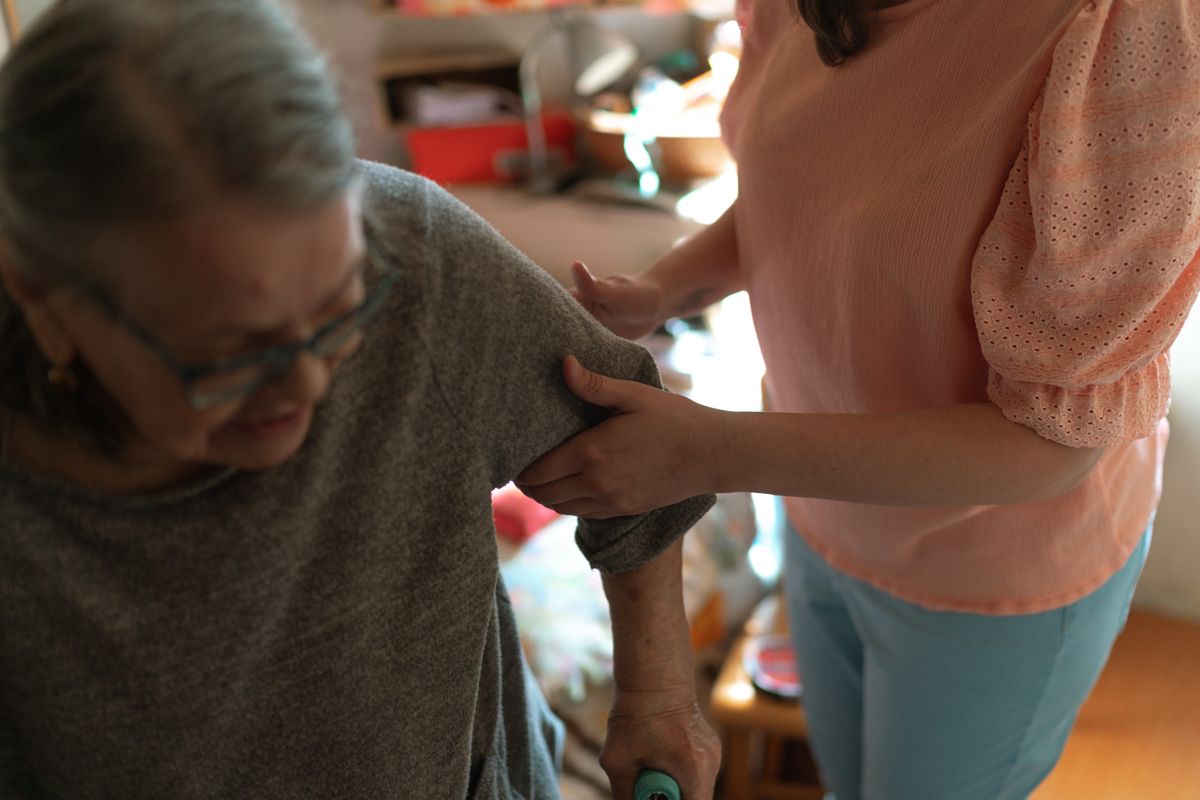
Falling and being unable to get up is more common than it seems. A fall with prolonged stay on the floor is one where the person spends an hour or more unable to get up. In a cohort study published in The BMJ with 110 people aged 90 or older, 60% experienced a fall during follow-up. Of these, 80% were unable to get up by themselves on at least one occasion, and 30% remained on the floor for an hour or more (Fleming and Brayne, BMJ 2008).
This wait has a clinical name and its own consequences: dehydration, hypothermia, pressure injuries, muscle damage, and, above all, the subsequent fear of walking again. It is no coincidence that the Spanish consensus document includes remaining on the floor unable to get up for an hour or more among the criteria that make a fall serious. The other three: loss of consciousness, two or more falls in one year, and any injury requiring medical attention.
For those living alone, this shifts prevention to a very specific area: someone noticing. A charged phone on your person, not on the nightstand. A daily call at a fixed time, a neighbor with a key, a telecare device, and emergency numbers taped to the fridge. All of this is as valuable as a well-secured rug.
What to Do in the First Minutes After a Fall
The general rule is not to rush to get up. Before moving, it’s advisable to stay still for a minute, breathe, and check for severe pain in the hip, wrist, shoulder, or head. If one leg appears shorter or turned outwards and weight cannot be borne, do not attempt to move the person: it is a hip fracture until proven otherwise.
- If you are well and can move: turn to one side, get on all fours, move towards a stable chair, and slowly get up by supporting yourself with both hands.
- If you cannot get up: do not exhaust yourself trying. Call for help, crawl to a blanket or something to keep warm, and change position frequently to protect your skin.
- If there is severe pain, deformity, or a head injury: do not move and call emergencies.
- If you are accompanying someone who has fallen: do not lift them by pulling an arm. First assess if there is pain or deformity.
| Situation | Who to Call |
|---|---|
| Loss of consciousness, severe pain, deformity, bleeding, or severe head injury | 112 (emergencies, multilingual service) |
| Has been on the floor for an hour or more, even if they seem fine | 112 or urgent medical assessment the same day |
| Head injury while taking anticoagulants | Hospital assessment even if feeling well |
| Moderate pain, bruising, fright, unable to get up but otherwise well | 24-hour emergency service or home doctor visit |
| Second fall in a few months with no apparent injury | Scheduled medical consultation to assess risk |
The case of anticoagulants deserves its own paragraph, because it is the most frequent mistake among older people who “have had a silly bump.” NICE guidelines recommend performing a cranial CT scan within 8 hours of a head injury in anticoagulated patients, even if there are no other symptoms (British Geriatrics Society, consulted August 24, 2026). An intracranial bleed can take hours to manifest.
The Three Questions That Measure Your Risk Today
The Spanish consensus document has simplified screening: no complicated tests, just three questions you can answer right now.
- Have you fallen in the last 12 months?
- Do you feel unstable when standing or walking?
- Have you been concerned about falling, leading you to limit your usual activities?
Even a single affirmative answer justifies discussing it with a doctor. And if any of these criteria are also met, the assessment should not wait:
- An injury that required visiting a healthcare center.
- Two or more falls in the last year.
- Having been on the floor for an hour or more unable to get up.
- Loss of consciousness or suspected fainting.
Home Review: Points That Prevent Most Falls
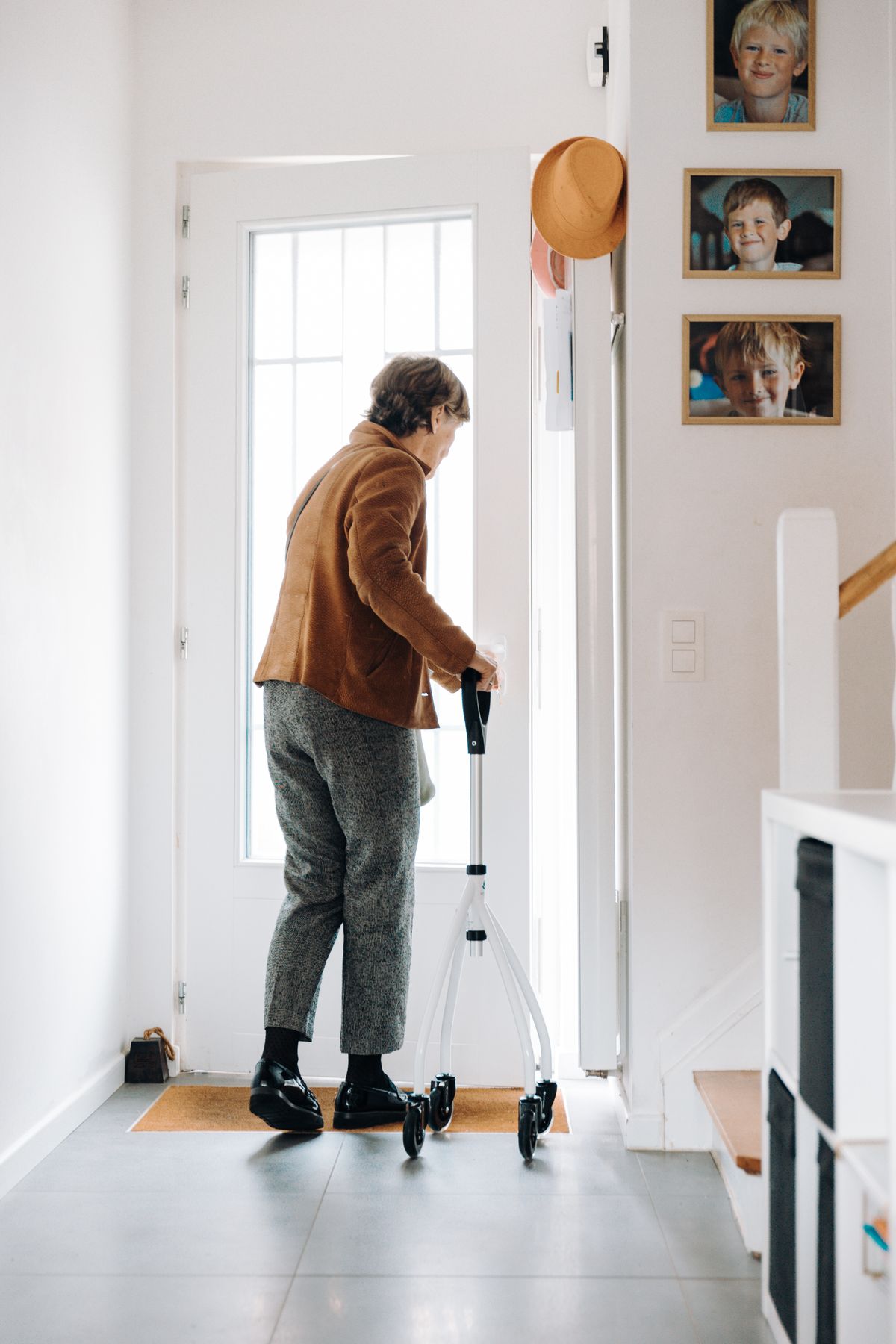
The Ministry itself includes a home risk checklist in its consensus document. This is its practical summary, which we recommend reviewing once a year, preferably before winter:
- Clear floors: no cables crossing the path, no magazines, boxes, or shoes in the way, and no furniture that forces you to maneuver around it.
- Rugs: remove them or secure them with an anti-slip backing. Entrance and bathroom mats cause the most trips.
- Sufficient and accessible lighting: switches at the entrance of each room and a lamp within reach from the bed.
- The hallway to the bathroom at night: a night light on this route is the most impactful cheap improvement.
- Bathroom: anti-slip mat in the shower or bathtub and firm grab bars next to the toilet and in the shower. Towel racks and faucets are not grab bars.
- Kitchen: daily-use items at waist height; no climbing on a chair for the good casserole dish.
- Bedroom: glasses, water, phone, and cane within arm’s reach from the bed.
- Footwear and clothing: closed slippers that support the foot and have an anti-slip sole; no flip-flops, no walking barefoot, and no trousers or robes that drag.
Medications That Increase the Risk of Falling
A FRID (fall risk increasing drug) is a medication that increases the risk of falls. The consensus document includes psychotropic drugs (benzodiazepines and other sedatives, antidepressants, antipsychotics, antiepileptics), drugs with anticholinergic effects, and several cardiovascular drugs, such as vasodilators and diuretics. The simultaneous use of many medications is itself a risk factor.
The practical conclusion is not to stop anything on your own — that can be worse than the fall — but to request a medication review. It’s a short consultation, can be done at home, and usually ends with two or three adjustments to doses or schedules that reduce morning dizziness and drops in blood pressure when standing up.
Exercise: The Most Scientifically Supported Measure
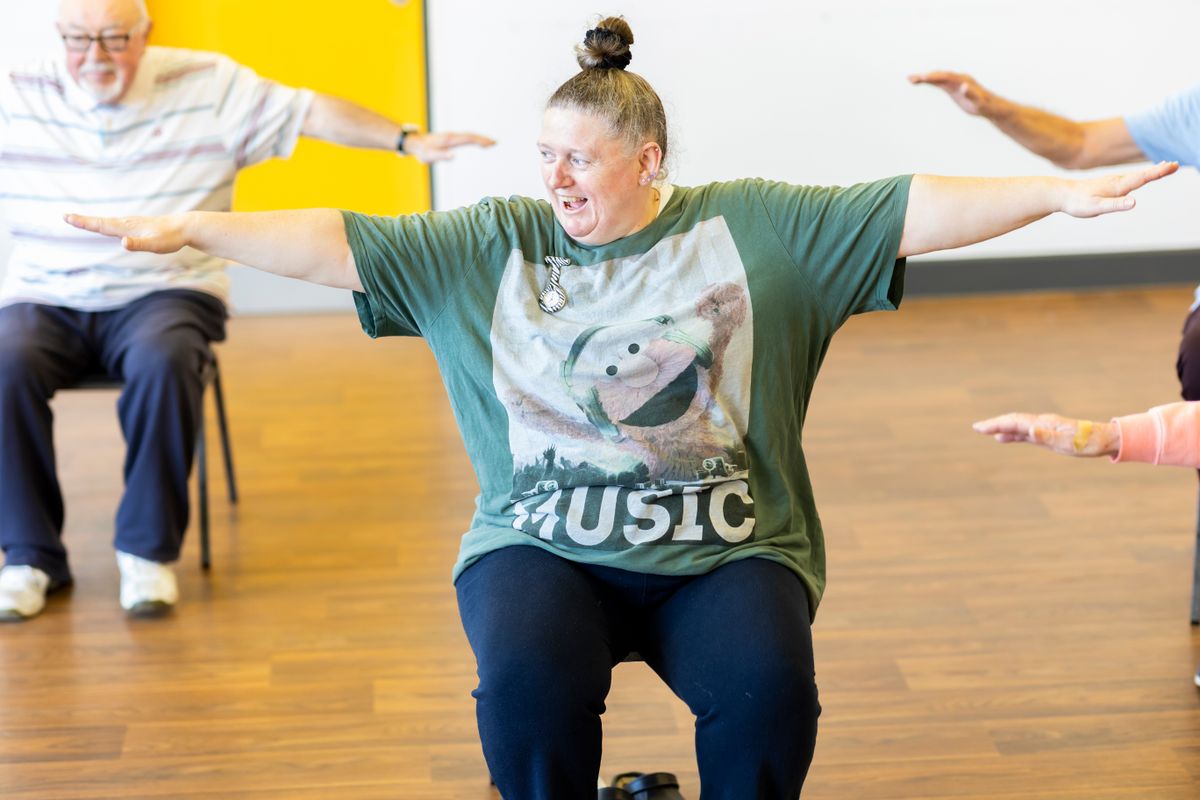
If you could only do one thing from this guide, it would be this. The US Preventive Services Task Force concluded in 2024, with moderate certainty, that exercise interventions provide a moderate net benefit in fall prevention. Their recommendation is to offer them to people aged 65 or older who live at home and are at higher risk.
In Spain, there is local evidence. The FRAILMERIT randomized clinical trial was conducted in primary care with people over 70. It combined a multi-component exercise program, nutritional recommendations, and team training. After 8 months, it achieved an absolute risk reduction of 29.8%: for every 3.4 people included in the intervention group, one improved at least one frailty criterion (Ministry of Health consensus document, 2026).
- Leg strength: getting up from a chair without using your hands, several sets a day. This is the action most similar to preventing a fall.
- Balance: standing on one foot next to the counter, walking in a straight line, changing direction.
- Daily walking: walking at a good pace, preferably accompanied and during daylight hours.
- Consistency over intensity: the benefit appears after several months, not a week.
A Simple Plan for Those Living Alone on the Coast
What works is not a device, it’s a routine. These five points can be set up in an afternoon:
- A daily call at a fixed time with a family member or neighbor, and an agreed plan of what to do if you don’t answer.
- The phone always on you, not on the nightstand or charging in another room.
- A copy of keys in the hands of a trusted person who lives nearby.
- Emergency phone numbers in plain sight, not just in your mobile contacts: 112 and a 24-hour emergency line.
- An annual review: medication, blood pressure, vision, and the three screening questions.
We can help with that. Residents of the Costa del Sol and Benidorm have access to our 24-hour emergency line at +34 624 62 86 00, with service in Spanish, English, German, French, and Finnish. We also provide ambulances for transfers and medical centers in Fuengirola, Torremolinos, Benidorm, Torrox, and Almuñécar.
👉 Request an in-home fall risk assessment or call us at +34 624 62 86 00: we review medication, balance, and critical points in the home in a single visit. And if you’re interested in the topic, here we explain which emergency symptoms you should never ignore and how to protect yourself from extreme heat after age 75.
Informational content prepared by Servicios Sanitarios Sisma and updated on August 24, 2026, with the Ministry of Health’s consensus document and the 2023 report from the National Hip Fracture Registry. It does not replace the assessment of a healthcare professional.
Frequently Asked Questions About Falls in Seniors
How many seniors fall each year in Spain?
Around 30% of people over 65 living in the community experience at least one fall per year, and at least 10% fall twice. Between 5% and 10% of falls result in a fracture. Falls are already the leading cause of death from external causes in Spain.
What should I do if I fall at home and am alone?
Do not try to get up suddenly. Stay still for a minute and check for severe pain or a leg turned outwards; in that case, do not move and call 112. If you are well, turn to your side, get on all fours, and get onto a stable chair. If you cannot get up, keep warm, call for help, and change position frequently.
Why is spending an hour on the floor after a fall so serious?
Because the initial injury is compounded by dehydration, hypothermia, pressure injuries, and muscle damage, in addition to the subsequent fear of walking. The Spanish consensus document considers remaining on the floor for an hour or more unable to get up a criterion for severity, even if the fall seems minor.
I hit my head and take anticoagulants. Should I go to the hospital?
Yes, even if you feel well. NICE guidelines recommend a cranial CT scan within 8 hours of a head injury in anticoagulated individuals, because an intracranial bleed can take hours to manifest.
What exercise best prevents falls?
Multi-component exercise: leg strength, balance, and walking, maintained for several months. The US Preventive Services Task Force recommends it for people over 65 at risk of falls. The Spanish FRAILMERIT trial achieved an absolute risk reduction of 29.8% after an eight-month program in primary care.
Should I stop medications that cause dizziness?
Never on your own. Psychotropic drugs, anticholinergic drugs, and some cardiovascular drugs like diuretics and vasodilators increase the risk of falls, but stopping them without supervision can be worse. The recommended action is to request a complete medication review from a doctor.
