Prescriptions and medication if you spend the winter on the Costa del Sol or in Benidorm: what works in 2026

Every autumn, thousands of people arrive on the Costa del Sol and in Benidorm to spend the winter, and many bring several months’ worth of medication in their suitcases. In forums for foreign residents—in English, German, Finnish, and French—one of the most frequent questions concerns prescriptions: how much can be brought, whether a prescription from your home country works in a Spanish pharmacy, and what to do when the treatment runs out.
Rules exist, but they are split between the Spanish Agency of Medicines and Medical Devices (AEMPS), the European Commission, the Ministry of Health, and each country’s health system. You can enter Spain with medication for a maximum of three months of treatment (AEMPS). A paper prescription from another EU country is valid here if it contains the minimum required data (except for special medical prescription drugs, such as narcotics), and e-prescriptions only work with 11 EU countries (Ministry of Health, August 2026). This guide brings it all together, country by country.
In 30 seconds: you can bring medication for a maximum of three months. Narcotics and psychotropics also require a certificate or permit, and the Schengen certificate is valid for a maximum of 30 days. A paper prescription from another EU country works in a Spanish pharmacy if it contains the minimum data, except for special medical prescription drugs, and you will usually pay the full price. E-prescriptions work with 11 countries, including Finland; those from Germany, France, Sweden, or Denmark are still in testing, and the UK is excluded. If you run out of treatment, a doctor in Spain can issue a prescription valid nationwide, which must be collected within ten days.
How much medication you can bring to Spain
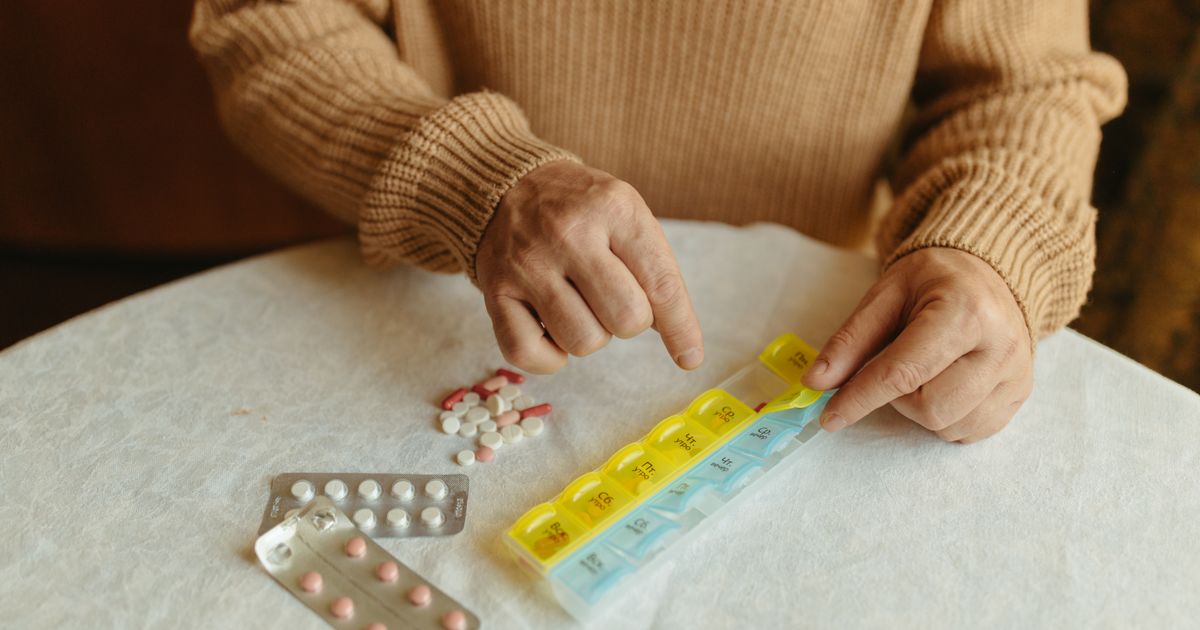
The AEMPS allows travelers to enter with their personal medication as long as the quantity is appropriate for the treatment and does not exceed what is necessary for three months. Exceptionally, larger quantities are accepted if justified. Furthermore, they warn that you may be asked for the prescription or a medical report both when entering and leaving Spain (AEMPS, medicines intended for the treatment of travelers).
For those spending four or five months here, this means that simply filling a suitcase is not enough: you must decide before leaving how you will obtain the rest of the treatment.
Sleeping pills, anxiolytics, and opioids: many require paperwork
Narcotics and psychotropics have their own rules. These include many opioid painkillers, sleeping pills, and anxiolytics, such as benzodiazepines. What you need depends on where you live:
- If you live in another Schengen area country, your country of residence issues you, based on a prescription, the certificate under Article 75 of the Schengen Convention, which is valid for a maximum of 30 days (Schengen Executive Committee Decision, EUR-Lex).
- If you come from outside the Schengen area, such as the United Kingdom or Ireland, you need prior permission from the AEMPS Narcotics and Psychotropics Area (AEMPS).
For a winter stay, this has three practical consequences:
- The Schengen certificate has a maximum validity of 30 days.
- The European e-prescription excludes narcotics and psychotropics.
- The recognition of paper prescriptions from other countries does not apply to medicines subject to special medical prescription (Royal Decree 1718/2010, art. 15 bis). These are those containing, in non-exempt doses, a narcotic or a psychotropic, among other cases (Royal Decree 1345/2007, art. 24).
If you are going to be here for more than a month and take any of these medications, talk to your doctor before traveling and book an appointment with a doctor in Spain well in advance.
On the plane: carry-on luggage and original packaging
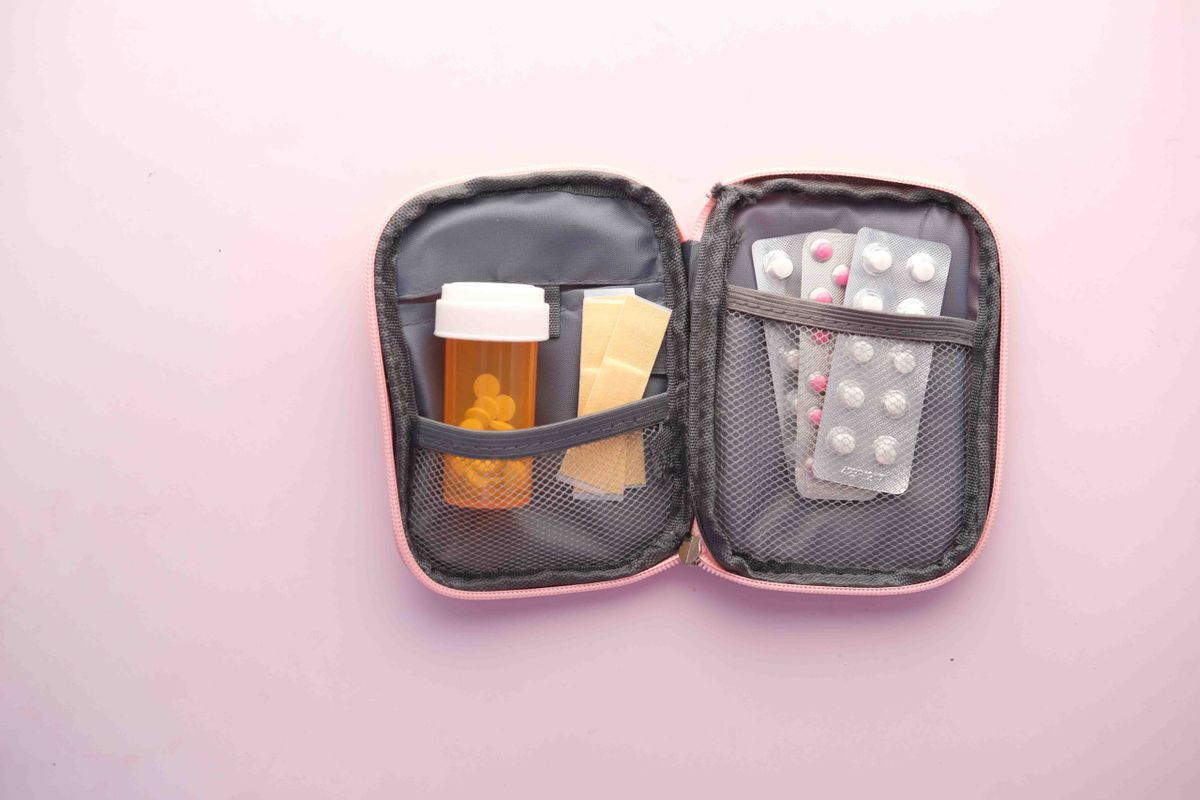
Air safety regulations limit cabin liquids to 100 ml containers, with one exception: liquid medications exceeding that amount are carried outside the plastic bag and go through the liquid control (AESA). The British National Travel Health Network and Centre (NaTHNaC) recommends carrying medication in hand luggage and in its original pharmacy packaging. It also advises traveling with a copy of prescriptions and a doctor’s letter with generic names (TravelHealthPro).
| What to bring | What it is for |
|---|---|
| Medication in hand luggage, in its original packaging | If checked luggage is lost, you won’t be left without treatment |
| Copy of prescriptions or a medical report | The AEMPS may request it when entering and leaving Spain |
| A list with the active ingredient, dosage, and schedule for each medication | Brand names change from one country to another; the active ingredient does not |
| Schengen certificate or AEMPS permit | Essential for narcotics and psychotropics |
| A report with your diagnoses and allergies | The doctor who treats you here will need it |
Which prescriptions from your country a Spanish pharmacy will accept
It depends on two things: if your country is in the EU and if the prescription is paper or electronic. A paper prescription issued by a doctor in one EU country is valid in the others (Your Europe, European Commission). Spain incorporates this in Article 15 bis of its prescription regulations (Royal Decree 1718/2010), which requires the foreign prescription to include at least:
- Your details: surname, full first name, and date of birth.
- The date the prescription is issued.
- The doctor’s details: surname and full first name, qualification, email, and telephone number with the international prefix, professional address including the country, and signature.
- The medication by its common name, i.e., the active ingredient, with the pharmaceutical form, quantity, dosage, and regimen. The brand name only appears if it is a biological medicine or if the doctor justifies it.
There are three limits. The pharmacist may refuse to dispense it if they have reasonable doubts about its authenticity or validity and cannot verify it. Recognition does not apply to medicines subject to special medical prescription (Royal Decree 1718/2010, art. 15 bis). And you will usually pay the full price and later request reimbursement from your health system (Your Europe, costs and reimbursements).
E-prescriptions only work with 11 countries
The European e-prescription allows you to collect a medication in a Spanish pharmacy that your doctor has prescribed electronically in your country. According to the Ministry of Health map updated on August 19, 2026, pharmacies in Andalusia and the Valencian Community can dispense e-prescriptions issued in Austria, Croatia, Cyprus, Czechia, Estonia, Finland, Greece, Latvia, Lithuania, Poland, and Portugal. Ten other EU countries are still in testing: Denmark, France, Germany, Hungary, Ireland, Italy, Malta, Slovakia, Slovenia, and Sweden (Ministry of Health, EU e-prescription).
So, less than half of EU countries currently have their e-prescription system connected with Spain, and with conditions. The patient pays 100% of the price of the medication in Spain. Excluded are, among others, narcotics, psychotropics, compounded medicines, and medications with more than four active ingredients (Ministry of Health, frequently asked questions). The European Health Data Space regulation will require e-prescriptions to work in all Member States, but not before March 2029 (European Commission).
| Your country | Paper prescription | E-prescription in Spain (August 2026) |
|---|---|---|
| Finland | Valid with minimum data | Yes, in almost all pharmacies since August 31, 2023 |
| Austria, Croatia, Cyprus, Czechia, Estonia, Greece, Latvia, Lithuania, Poland, and Portugal | Valid with minimum data | Yes |
| Denmark, France, Germany, Hungary, Ireland, Italy, Malta, Slovakia, Slovenia, and Sweden | Valid with minimum data | In testing: request a paper prescription |
| Belgium, Bulgaria, Luxembourg, Netherlands, and Romania | Valid with minimum data | No exchange |
| United Kingdom | Outside European prescription recognition | No exchange |
Finland, Germany, and the United Kingdom: three different situations
If your prescription is Finnish: what Kanta says
Finland is the most convenient case. According to Kela, the Finnish Social Security, the country’s e-prescription has worked in Andalusia since April 18, 2023, and in the Valencian Community since June 29, 2023. Since August 31, 2023, it has been accepted in almost all pharmacies in Spain (eu-terveydenhoito.fi, Kela). At the pharmacy, they will ask for your passport or ID card, and prior consent in Finland is no longer necessary (Kanta).
With a Finnish e-prescription, you cannot collect narcotics or most medications that act on the central nervous system in Spain. There is also a detail that causes many problems: the quantity. According to Kanta, the Finnish e-prescription service, the most common reason a medication cannot be purchased abroad is having it prescribed for a period of time (“for three months”). The prescription must indicate the total quantity or the number of packs (Kanta, information for professionals), so ask your doctor to issue it this way before traveling.
If your prescription is German, French, or from another country in testing
As of August 19, 2026, the Ministry of Health still marks Germany as a country “in testing,” along with France, Italy, Sweden, and Denmark. The official German E-Rezept portal places the start of the European service in 2026, without a specific date (das-e-rezept-fuer-deutschland.de). Until it is activated, the practical thing to do is ask your GP for a paper prescription with the minimum data from the list above.
If you come from the United Kingdom
Recognition of prescriptions between EU countries has not included the UK since Brexit, and the country is not connected to the European e-prescription system either. The British Government warns that some medications may not be available in the destination country (GOV.UK). It is recommended to bring sufficient treatment, within the three-month limit, and see a doctor in Spain before it runs out, so they can assess the treatment and decide whether to issue a Spanish prescription.
What to do if you run out of medication in Spain

You have three paths, and it is advisable to choose one before opening the last box:
- E-prescription from your country, if it is one of the 11 connected: your doctor issues it and you collect it here paying the Spanish price.
- Paper prescription from your doctor in an EU country, with the minimum data required by regulations.
- Consultation with a doctor in Spain, who assesses your treatment and, if they consider it appropriate, issues a Spanish prescription.
The third option works regardless of which country prescribed it. A prescription issued by a doctor in Spain, in a public or private center, is valid throughout the national territory. It must be collected from the pharmacy within ten calendar days from the date of prescription, and each prescription covers a maximum of three months of treatment (Royal Decree 1718/2010). Bear in mind that, with a private prescription, the medication is not funded by public healthcare and you pay for it in full.
To ensure the consultation is quick and the change of country does not introduce errors, bring:
- The boxes or blister packs of what you take, or a photo of each.
- Your last prescription or your doctor’s report, even if it is in another language.
- The list of diagnoses and allergies.
- Your latest tests, if your treatment requires periodic monitoring.
Many medications are sold in Spain under another brand name, and some do not exist in the same presentation. That is why the key information is the active ingredient and the dosage, not the brand on the box.
Five mistakes that leave people without treatment
- Waiting until the last box. For some presentations, the pharmacy has to order them, and getting an appointment also takes time. Request a consultation one or two weeks in advance.
- Traveling with an incorrectly issued e-prescription. In the Finnish case, a prescription “for three months” instead of a specific quantity is the most common error.
- Bringing only the brand name. Without the active ingredient, the pharmacist or doctor has to guess what you are taking.
- Forgetting the paperwork for psychotropics. Many opioids, sleeping pills, and anxiolytics require the Schengen certificate or AEMPS permit.
- Following prescriptions from two countries without anyone cross-checking them. If you are prescribed separately by a doctor in Spain and another in your country, ask one of them to review the full list to avoid duplications and interactions.
Pre-travel checklist
- If you take narcotics or psychotropics, request the Schengen certificate or AEMPS permit as soon as possible.
- Calculate how many weeks you will be staying and how much medication you need, without exceeding three months.
- Ask your doctor for the appropriate prescription: electronic and with a specific quantity if your country is one of the 11 connected, or on paper with the minimum data.
- Prepare a list with the active ingredient, dosage, and schedule for each medication, and a copy of your diagnoses and allergies.
- Keep medication in your hand luggage and a photo of the prescriptions on your phone.
- Locate a medical center where they can assist you in your language before you arrive.
A doctor in your language throughout the winter
Our medical centers in Fuengirola, Torremolinos, Benidorm, Torrox, and Almuñécar provide services in Spanish, English, German, French, and Finnish. If you prefer not to travel, a home-visit doctor can go to your house or hotel. During the consultation, the doctor assesses your treatment and guides you on how to continue it in Spain. Discussing it in your language reduces misunderstandings with dosages and schedules, as we explain in why language is a vital sign.
👉 Book an appointment to review your treatment or call us at +34 624 62 86 00. For anything that cannot wait, we have our 24-hour emergency line. If you are spending the winter here, you might also be interested in the 2026-2027 flu and COVID vaccine guide. It is also useful to know how to recognize a stroke and why to call 112 and how international insurance works with a private clinic.
Informational content prepared by Servicios Sanitarios Sisma and updated on September 27, 2026, with information from AEMPS, the European Commission, the Ministry of Health, the BOE, and Kanta. E-prescription rules change as new countries connect. It does not replace the assessment of a healthcare professional or a pharmacist.
Frequently asked questions about prescriptions and medication in Spain
How much medication can I bring to Spain?
A maximum of what is necessary for three months of treatment, except for justified exceptions, according to the AEMPS. You may be asked for the prescription or a medical report when entering and leaving Spain. Narcotics and psychotropics also require a document. If you live in another Schengen country, it is the Article 75 Schengen certificate, valid for a maximum of 30 days. If you come from outside the Schengen area, it is a permit from the AEMPS.
Will a foreign prescription be accepted in a Spanish pharmacy?
If it is a paper prescription from an EU country with the minimum data (patient, date, doctor, and medication by its common name, with dosage and quantity), it is valid in Spain, except for medicines subject to special medical prescription, such as those containing narcotics or psychotropics. The pharmacist may refuse if they have reasonable doubts about its authenticity, and you will usually pay the full price. UK prescriptions are not included in this European recognition.
Can I collect my Finnish e-prescription in Spain?
Yes, except for narcotics and most medications that act on the central nervous system. It has worked in almost all pharmacies in Spain since August 31, 2023. Bring your passport or ID card and ask your doctor to indicate the total quantity or number of packs, not a duration of treatment. You will pay the full price in Spain.
Does the German E-Rezept work in Spain?
Not yet. As of August 19, 2026, the Ministry of Health marks Germany as a country in testing, and the official E-Rezept portal anticipates the start of the European service in 2026 without a specific date. In the meantime, ask your doctor for a paper prescription with the minimum data required by the EU.
I am British and I am running out of medication. What do I do?
Book an appointment with a doctor in Spain one or two weeks in advance and bring the boxes, your last prescription, and a report with your diagnoses. The doctor will assess the treatment and, if they consider it appropriate, will issue a Spanish prescription, valid in any pharmacy in the country.
How much time do I have to collect a Spanish prescription?
Ten calendar days from the date of prescription, according to Royal Decree 1718/2010. Each prescription covers a maximum of three months of treatment.