Cardiac arrest at home or in your residential development: what to do, CPR, and defibrillators on the Costa del Sol and in Benidorm

According to the Spanish Out-of-Hospital Cardiac Arrest Registry (OHSCAR), which recorded 9,499 cases in 2022, 60.3% occurred at home. Bystanders performed cardiopulmonary resuscitation (CPR) in 39.2% of cases and deployed a public-access defibrillator in 3.9%. Survival to hospital discharge reached 11.5% (OHSCAR Registry, Emergencias journal, 2024).
If you live in a house, an apartment, or a residential development on the Costa del Sol or in Benidorm, or are spending your holidays here, the person standing right next to the victim during those crucial first minutes could be you. Here are the CPR steps based on the 2025 European guidelines, what 112 will ask you, who is legally permitted to use a defibrillator in Andalusia and the Valencian Community, and how to locate the nearest one. It is a good time to review this, especially ahead of family gatherings at Christmas.
In 30 seconds: if someone is unresponsive, call 112, put the phone on speaker, and immediately begin compressing the center of their chest—hard, fast, and without stopping. You do not need formal training to perform compressions: the operator will guide you through every step. If there is an automated external defibrillator (AED) nearby, have someone bring it, notify 112, and follow their instructions. In Andalusia, current regulations require verifiable CPR and AED certification to use one; in the Valencian Community, if no certified person is present, anyone may use it while in communication with 112. Find out today where the nearest device is to your home.
What to do during a cardiac arrest, step by step
These steps adhere to the 2025 European Resuscitation Council (ERC) guidelines, as outlined by the Resuscitation Council UK (RCUK, October 27, 2025):
- If the person is unresponsive, call 112 and put the call on speaker so your hands remain free. Under the 2025 guidelines, you no longer need to check breathing first: assume cardiac arrest in anyone who does not respond.
- Observe their breathing while they answer. If they are not breathing normally or are only gasping (agonal breathing), treat it as a cardiac arrest and inform the operator immediately.
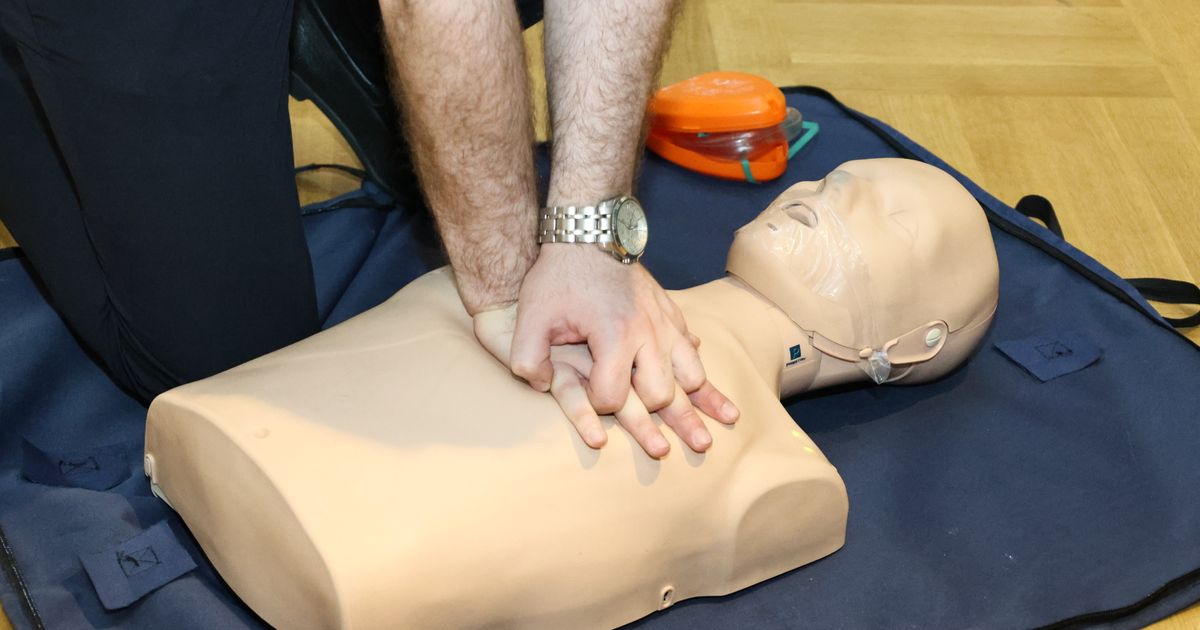
- Compress the center of the chest, over the lower half of the breastbone: deliver between 100 and 120 compressions per minute, to a depth of 5 to 6 cm.
- If you are not trained in rescue breaths (mouth-to-mouth), perform compressions only, without stopping, until emergency personnel arrive.
- Ask someone to fetch a defibrillator (AED) if one is nearby, and let 112 know. Deploy it as soon as possible, following its automated voice prompts and the operator’s directions. Authorized use depends on the autonomous region, as detailed below.
- Resume chest compressions immediately after a shock. Follow the device’s voice prompts and the operator’s guidance until the ambulance arrives.
If the person is in bed, begin CPR right there. Many cardiac arrests occur at home while the person is lying down, and valuable time is often lost trying to move them to the floor. The Resuscitation Council UK advises against this: “do not move the person from a soft surface, such as a bed, to the floor.” Start CPR on the bed and, if necessary, compress deeper to compensate for the mattress giving way.
Why the first minutes depend on the bystander
During a cardiac arrest, the heart ceases to pump blood effectively. Chest compressions partially take over this function until a defibrillator or an ambulance arrives. This does not affect only the elderly: in the 2022 OHSCAR registry, the average age was 63, and 71.3% of patients were men.
According to OHSCAR, the median response time in 2022 was 11.9 minutes between the initial call and the arrival of the first emergency medical crew—in half of all cases, it was longer. The regional government of Andalusia (Junta de Andalucía) notes that survival rates rise “above 50%” when CPR is started and an AED is used within 3 minutes (Junta de Andalucía, October 18, 2026). While the regional government does not detail the dataset behind this figure, reaching that 3-minute window relies entirely on the person right next to the patient taking action.
Bystander CPR rates have risen steadily. According to OHSCAR trend data, rates increased from 18.2% in 2013–2014 to 27.0% in 2017–2018, reaching 39.3% in 2022. By contrast, bystander defibrillator use remains critically low: 4.4%, 6.3%, and 4.0% across those same periods.
OHSCAR data does not include the province of Alicante. The 2022 figures in the graph are derived from the registry trend table and differ by one decimal point from those in the text.
How to recognize a cardiac arrest and distinguish it from a heart attack
You can recognize a cardiac arrest by two clear signs: the person is unresponsive when spoken to or touched, and they are not breathing normally, or are merely gasping. According to the Resuscitation Council UK, brief seizure-like movements may occur at the onset. If the person remains unresponsive and is not breathing normally afterward, treat it as a cardiac arrest.
A heart attack (myocardial infarction) is different: an artery supplying the heart becomes blocked, and the patient is usually conscious, experiencing chest pain that the Spanish Heart Foundation describes as “a heavy, pressing weight behind the breastbone.” When suspecting a heart attack, Hospital Puerta de Hierro advises: “call 112 immediately and do not attempt to transport yourself to the hospital.”
| Cardiac arrest | Heart attack | |
|---|---|---|
| Patient’s state | Unresponsive | Usually conscious |
| Signs and symptoms | Not breathing normally or merely gasping | Heavy, crushing chest pain (FEC); pain radiating to the left arm, neck, or jaw, accompanied by nausea or sweating (Hospital Puerta de Hierro) |
| What to do | Call 112 on speaker, begin chest compressions, and request an AED | Call 112; do not attempt to drive to the hospital yourself |
A heart attack can lead to cardiac arrest. If someone with acute chest pain becomes unresponsive and stops breathing normally, alert 112 immediately and start compressions. Other symptoms also warrant an urgent call: we cover them in our guide to red-flag emergency symptoms you should never ignore.
What 112 will ask you
When you call regarding an unresponsive person, the emergency operator will ask focused questions and deliver CPR instructions over the phone. As the Andalusian Regional Government summarizes: “Telephone-assisted CPR supports bystanders who have no prior medical training” (Junta de Andalucía, October 18, 2026). In the Valencian Community, dispatchers handled an average of 21 calls per day for suspected cardiac arrest, with telephone-guided CPR initiated in 74 % of those instances (Generalitat Valenciana, October 16, 2025). European guidelines also advise operators to ask whether an AED is readily available. If the operator does not ask and you know one is nearby, make sure to tell them.
Use speakerphone, do not hang up until instructed to do so, and never interrupt chest compressions while talking. If someone else is with you, send them to fetch the defibrillator or wait outside to direct the ambulance crew.
112 dispatchers provide service in English, French, and German in both Andalusia and the Valencian Community; if you speak Finnish or another language, request English immediately. We explain this in detail in our guide on stroke symptoms and 112 language support. Do not wait for a translator: place the call and begin compressions.
Essential phrases for the emergency call
Keep these phrases accessible near your phone. They allow dispatchers to grasp the critical facts even if your Spanish is basic:
| Purpose | What to say in Spanish |
|---|---|
| Request your language | “¿Puede atenderme en inglés / francés / alemán?” (Can you assist me in English / French / German?) |
| State the emergency | “No responde y no respira bien.” (They are not responding and not breathing properly.) |
| State your current action | “Estoy haciendo el masaje.” (I am performing chest compressions.) |
| Ask for a defibrillator | “¿Hay un desfibrilador cerca?” (Is there a defibrillator nearby?) |
| Report you have an AED | “Aquí hay un desfibrilador.” (There is a defibrillator here.) |
| Provide the location | “Estoy en la urbanización…, calle…, número…, en Mijas / Benidorm.” (I am at [development name], [street], [number], in Mijas / Benidorm.) |
Defibrillators: who is legally allowed to use them in Andalusia and the Valencian Community
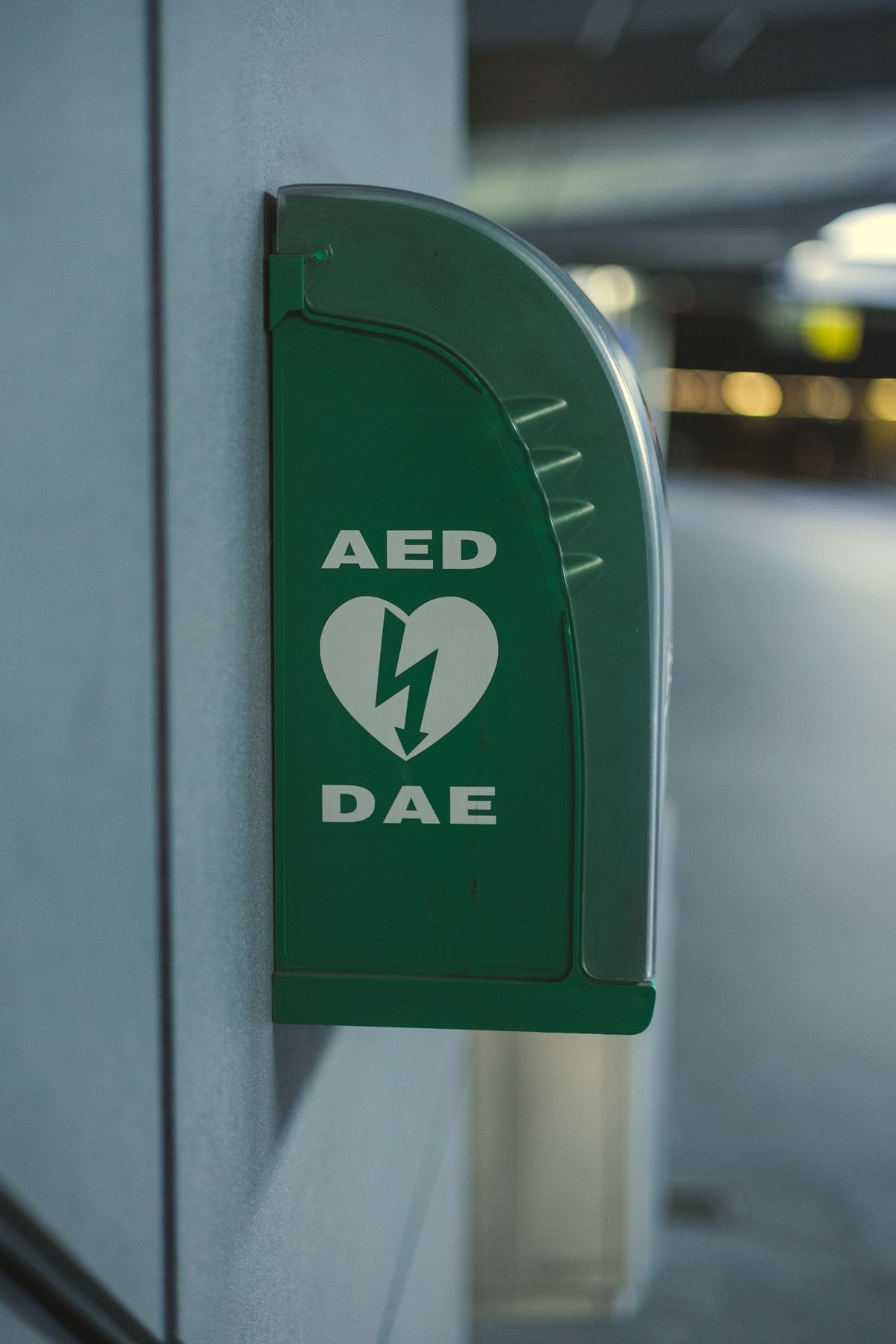
An automated external defibrillator (AED) is a portable device that analyzes cardiac rhythm and, when indicated, delivers an electrical shock. It guides users via clear voice and screen prompts. The national framework, Royal Decree 365/2009, delegates the regulation of AED use by individuals with “basic minimum knowledge” to Spain’s autonomous communities (BOE, Royal Decree 365/2009). Consequently, regulations differ between the Costa del Sol and Benidorm.
In Andalusia: verifiable training required
In Andalusia, Decree 22/2012 applies. Article 7.1 permits physicians, nurses, and emergency medical technicians to use an AED, as well as “any individual” possessing basic, verifiable training in CPR and AED operation (Junta de Andalucía, Decree 22/2012, consolidated text). According to the Junta’s official AED FAQ, in practice this requires completing an “accredited training course.” Operating an AED without verifiable training constitutes a minor infraction (Article 11.2.a). Furthermore, Article 8.1 establishes an obligation to notify emergency services prior to deployment.
A pending Andalusian draft decree
In October 2025, the regional government published a draft decree for public consultation (BOJA No. 189, October 1, 2025). Under this proposed framework, 061 dispatchers could authorize any bystander to use an AED under remote supervision, mandate devices in additional premises (including hotels with over 200 beds, care homes, and pharmacies), and make the regional defibrillator registry public. As of November 12, 2026, the decree remains “under development” (Junta de Andalucía, pending legislation): until officially enacted, the 2012 decree remains fully in force.
In the Valencian Community: anyone may use an AED while in communication with 112
In the Valencian Community, Decree 159/2017 applies (referring to the device as a DESA). Article 8.2 establishes that, in the absence of a certified individual, any bystander present may operate the defibrillator, “provided they remain in direct communication” with the emergency medical coordination center (CICU) via 112 (DOGV No. 8149, October 16, 2017).
Overview: Andalusia vs. Valencian Community
Your immediate response remains identical in both regions: dial 112, announce that an AED is available, and follow the operator’s instructions. Begin chest compressions while the unit is being retrieved. If you reside in Spain, taking an accredited CPR and AED course ensures you are fully prepared to act; in Andalusia, it is also the official route to satisfy legal training requirements.
| Andalusia (Decree 22/2012) | Valencian Community (Decree 159/2017) | |
|---|---|---|
| Who can operate an AED | Healthcare professionals (physicians, nurses, EMTs) and individuals with verifiable CPR and AED training | Certified individuals; if none are present, any bystander in direct communication with 112 |
| Emergency services notification | Mandatory before use (Art. 8.1) | Uncertified users must maintain active communication with 112 (Art. 8.2) |
| Mandatory installations (Art. 3) | Large retail premises, commercial ports and airports, major transit hubs, sports facilities with 500+ daily visitors, and public venues with a capacity of 5,000+ | Commercial ports and airports, major transit hubs, sports facilities with 500+ daily visitors, educational centers with a capacity of 1,500+, and public venues with a capacity of 1,000+ |
| Defibrillator registry | No public registry identified (the draft decree would open it to the public). Málaga city maintains its own municipal map | No public regional registry identified. Benidorm maintains an active municipal map |
Informational summary as of November 12, 2026. Consult each decree’s full legal text for exact thresholds and statutory exemptions.
Where to find a defibrillator near you
In the city of Málaga, there are 742 registered defibrillators, mapped publicly by the City Council at desfibriladores.malaga.eu (Málaga City Council, March 12, 2026). In 2024, Benidorm integrated an interactive map on its municipal portal featuring 64 cardio-protected zones (Benidorm City Council, July 10, 2024); figures reflect that reporting date.
In Fuengirola, Torremolinos, Mijas, Torrox, or Almuñécar, no publicly published municipal AED maps were found. Locate the nearest device before an emergency happens: check with your homeowners’ association, hotel front desk, or sports club. If your residential complex or building has an AED, identify its exact location and take note of it.
Christmas and heart health: what the BMJ Swedish study revealed

A landmark 2018 study published in the BMJ analyzed 283,014 heart attacks recorded across Sweden between 1998 and 2013 using SWEDEHEART registry data. The risk of myocardial infarction was 37% higher on Christmas Eve, peaking around 10:00 PM, and 15% higher across the broader Christmas holiday period. The increase was most pronounced among adults over 75, individuals with diabetes, and patients with pre-existing coronary artery disease (BMJ, 2018).
These findings should be interpreted with care: it was an observational study conducted in Sweden, focused on myocardial infarctions rather than sudden cardiac arrests, and does not demonstrate that holidays directly cause heart attacks or that identical patterns occur in Spain. The clinical takeaway, however, remains clear: if someone experiences crushing chest pressure, sweating, or nausea during a family meal, do not wait until dinner ends or the next morning. Call 112 immediately.
Residential developments: helping the ambulance find you quickly
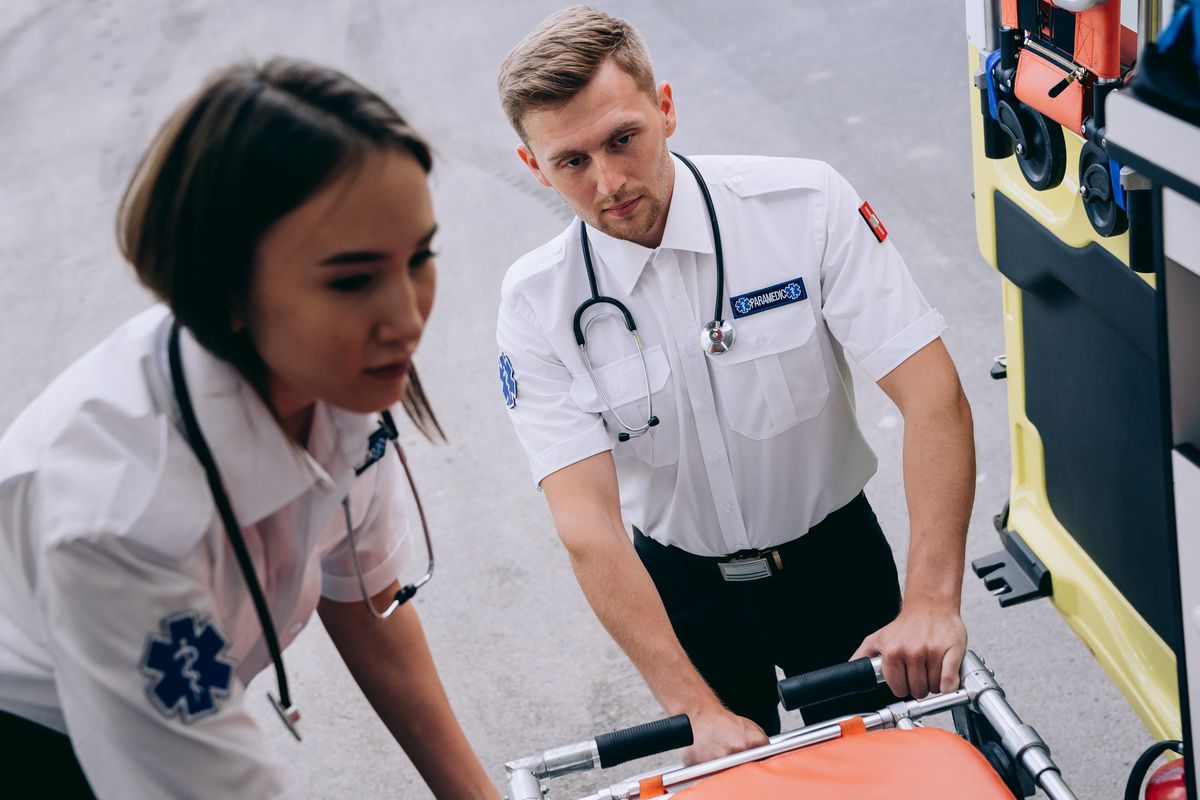
Within large residential estates and urban developments, locating the exact property can cost vital minutes: duplicate street names, poorly lit house numbers at night, and coded security gates can all delay responders. Take these practical precautions today, not during an emergency:
- Keep your complete address clearly written by the phone in Spanish: development name, street, house number, entrance/gate, apartment number, and municipality.
- Write down security gate access codes or entrance buzzers to give directly to 112.
- Send someone to the main entrance of the development to flag down and guide the ambulance crew.
- Turn on all outdoor and house lights, particularly after dark.
- Keep the front door unlocked and ensure a clear, unobstructed path to the patient.
- Notify the concierge or security guard, if available, to open access barriers immediately.
If you are alone with the patient, notify 112 immediately and prioritize continuous CPR over leaving to open gates.
How our medical teams support you
If someone is unresponsive, call 112 immediately. That call activates emergency response ambulances and dispatch-guided CPR. For non-life-threatening healthcare needs, our teams are close by. Across our medical centers in Fuengirola, Torremolinos, Benidorm, Torrox, and Almuñécar, or through our home-visit doctor service, we monitor blood pressure, pulse, and medical regimens as part of proactive cardiovascular care. Following hospital discharge, we coordinate transfers in ambulances equipped for basic and advanced life support. Furthermore, our event medical coverage deploys personnel fully certified in emergency life support. We assist you in Spanish, English, German, French, and Finnish.
👉 Schedule a blood pressure, pulse, and medication check or call us at +34 624 62 86 00 (consultations and appointments; not a replacement for 112).
Informational content produced by Servicios Sanitarios Sisma and updated on November 12, 2026. Sources: OHSCAR registry (Emergencias journal, 2024), Resuscitation Council UK (ERC 2025 guidelines), Regional Government of Andalusia, Generalitat Valenciana, Andalusian Decree 22/2012, 2025 Andalusian Draft Decree, Valencian Decree 159/2017, Royal Decree 365/2009, Málaga and Benidorm City Councils, BMJ (2018), Hospital Puerta de Hierro, and the Spanish Heart Foundation. This content does not replace certified CPR training or individual medical evaluation. In the event of an unresponsive person, call 112 immediately.
Frequently asked questions about cardiac arrest
Can I use a defibrillator if I haven’t completed a training course?
It depends on the autonomous region. In Andalusia, current legislation (Decree 22/2012) requires verifiable CPR and AED knowledge, which in practice requires an accredited certificate. In the Valencian Community (Decree 159/2017), if no certified person is present, anyone may operate an AED while in continuous communication with 112. In both regions: call 112 immediately, begin compressions, and follow the dispatcher’s real-time instructions.
Are rescue breaths (mouth-to-mouth) necessary?
Not if you are untrained. The 2025 European guidelines, highlighted by the Resuscitation Council UK, specify that if you are not trained in rescue ventilations, you should provide hands-only CPR: uninterrupted compressions to the center of the chest at a rate of 100 to 120 beats per minute. If you are formally certified in CPR and confident in providing breaths, you can alternate them with compressions. In either scenario, the 112 operator will talk you through the process.
Can I cause physical harm by performing chest compressions?
The clinical risk is minimal. As the Resuscitation Council UK emphasizes under the 2025 European guidelines: “the risk of harm from CPR is low,” and rescuers should not fear causing serious injury even if the individual turns out not to have been in cardiac arrest. Crucially, the greatest harm is failing to act when someone requires CPR and defibrillation. Compress firmly to a depth of 5 to 6 cm and follow the 112 operator’s pacing instructions.
What is the difference between a heart attack and a cardiac arrest?
A heart attack involves a blocked coronary artery; the individual usually remains conscious and describes chest pain as a “heavy, crushing weight behind the breastbone” (Spanish Heart Foundation). In contrast, during a cardiac arrest the heart stops pumping effectively; the person becomes unresponsive, stops breathing normally, and requires immediate chest compressions. Both require an immediate call to 112; if a heart attack progresses to cardiac arrest, start CPR immediately.
Where is the nearest defibrillator located?
Check proactively with your homeowners’ association, hotel reception, or sports facility before an emergency strikes. Málaga city (desfibriladores.malaga.eu) and Benidorm provide public municipal AED maps; equivalent public maps are not currently available for Fuengirola, Torremolinos, Mijas, Torrox, or Almuñécar. In an emergency, if you know a defibrillator is nearby, inform the 112 operator immediately.
Will the 112 dispatcher instruct me if I don’t know CPR?
Yes. 112 dispatchers provide real-time, step-by-step CPR instructions over the phone while the ambulance is en route, supporting callers with no previous training, as highlighted by regional emergency services. Switch your phone to speaker to keep your hands free, and if you do not speak Spanish fluently, request English, French, or German immediately.